Friday, 26 October 2012

Of their Slaves.


There were many Particular Circumstances to be observed, concerning the Slaves, which a Jew should chance to have, whether it were an Hebrew Slave, or a Canaanitish: but now if any among the Eastern, or Barbary Jewes chance to buy any Slaves, they keep them such, and either make use of them Themselves, or else sell them away to others, according as the Custome of that Particular place is, where they inhabite. And, in case a Slave should desire to be made a Jew, they circumcise him, and wash him all over in water, and so make him Free.

Leone (da Modena). History of the Rites, Customes and Manner of Life of the Present Jews. Page 225

Thursday, 25 October 2012

English State Papers, 1607

Portuguese merchants, living as concealed Jews, frequenting mass, expelled from London

English State Papers, 1607

"Almanza", an Antwerp Jew, gets blamed when his nephew runs off with the cash, 1698


"The Citizens of Antwerp twice invited the Elector of Bavaria to Honour their Grand Festival with his Presence. But he gave ‘em a positive Denyal, alledging, That he could not go to a City that had so obstinately refus’d their Consent to the Subsidies granted by the States of Brabant, for the Service of his majesty; as also for that they had contemn’d the Orders he sent ‘em, to commit the Jew Almanza to the Castle of Antwerp, to the end that as the King’s Cashier at Antwerp he might be brought to his Tryal before the Superintendant of the Military Justice. It seems this Jew, who has liv’d at Antwerp many Years, broke fraudulently, some Months since, for above Four hundred thousand Florins; for which, not being able to alledge any other Reason, but the premeditated Flight of his Nephew with his Cash, he was immediately committed to Prison; he has been twice examin’d by the Authority of the City; but the Persons concern’d, demand, that he may be punish’d with Death, according to the Rigour of the Law; and then he must be sent to the Castle."

The Present State of Europe, Or, The Historical and Political Mercury, Volume 9. May 1698. Page 211


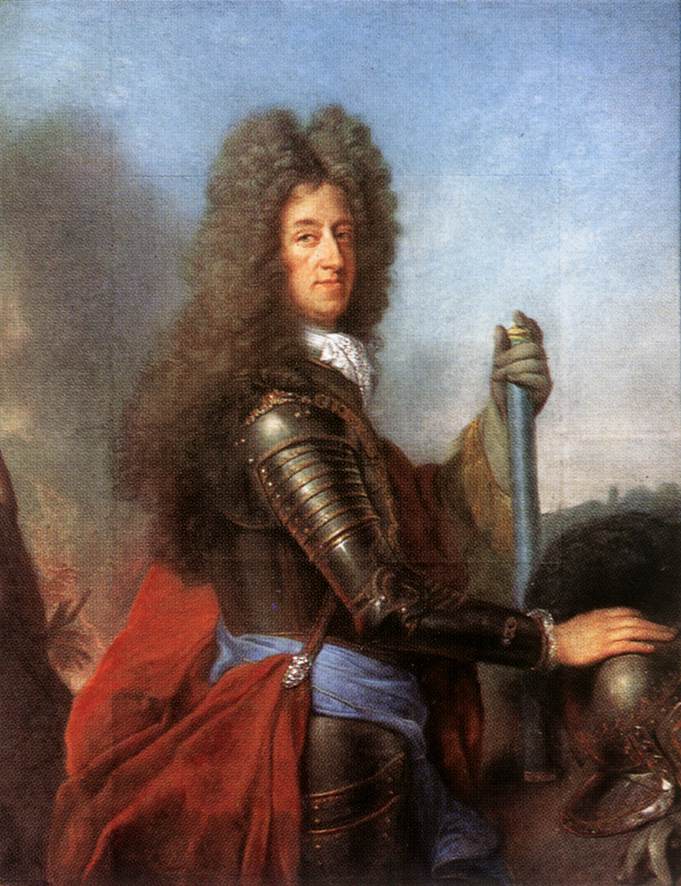
The Elector of Bavaria was Maximilian II Emanuel (pictured), who was Governor of the Spanish Netherlands at the time. He ambition for his Wittelsbach dynasty to replace the Hapsburgs as Holy Roman Emperors led to his supporting the French during the War of Spanish Succession. He had a bad war, but recovered his throne in 1713.

A debate held at white-hall about the admission of the Jews, 1655

A failed attempt by Manasseh Ben Israel to win admission to England in 1655:

“Upon the tendring of certain Proposals to the Protector by Manasseh Ben Israel, a Jewish Merchant, in the behalf of his Hebrew Nation, for their free admission to Trade and exercise of the Religion in England, a Conference was held about it several days at White hall, but the Members of the Council, and certain Divines of the most Eminent then in esteem: and many Arguments being urged, some for, others against their admission; those against it so far prevailed, that the Proposals took no effect.”

Sir Richard Baker, Edward Phillips, Sir Thomas Clarges. A chronicle of the kings of England. 1684. Page 627

The Jews and the Slave Trade

Some years ago the Nation of Islam, a Muslim-ish African-American group, published a book claiming that “the Jews” had dominated the slave trade. I think the point was to say that the alleged activity of one group of people in the 16th-19th Centuries says something about another group of people in the 20th-21st Centuries. The book was shredded by scholars, but they did say that for a moment Jews were significant in the Brazilian and Caribbean slave trades.

I am no expert, but have been reading a little around that period. Of course, the “Jews” in question were baptised Christians of Jewish origin. We don’t know what they believed. The strong probability is that all or most of them had never seen an Ashkenazi Jew and – if we focus on the mid-16th Century – it would be another two hundred and fifty years before any of their descendants who returned to Judaism might have considered an Ashkenazi Jew as belonging to the same “tribe”, someone they might consider marrying.

My impression is that a few New Christian families were involved in the Atlantic slave trade for a period starting in the mid-16th Century. I keep seeing the Dias name. I suspect that one or some of them had been involved in the Portuguese trade with India, and had seen an opportunity along the way.

Some of the Dias’ presumed relatives owned sugar plantations in Brazil, so will have owned slaves. These Brazilian relatives fought for the Catholic Portuguese against the philo-Jewish Protestant Dutch in the 1640s. A few decades later a slave-trader in Cartagena, in Spanish Latin America, was accused of “judaising”. I suspect he was somehow related to or connected to the Dias family, and possibly also to my own ancestors.

With hindsight, the African slave trade is a unique phenomenon. At the outset – and I am speculating – maybe it was no different from other forms of 16th Century slavery. Muslims enslaved Christians, including prisoners of war. There were Algerian slave raids as far north as England and Ireland. In Iberia and elsewhere, Christians enslaved Muslims and Jews. Criminals could become galley slaves.

Christians, Muslims and Jews were all clear that their adherents could not enslave other adherents, but people of other religions did not merit human rights. Before it developed onto an industrial scale, the African slave trade seems to have involved members of one African tribe traded by another tribe for European products.

But what about the Dias and other families involved in slavery? Confessionally they were Catholics of Jewish origin and, as far as I can tell, their descendants seem to have been overwhelmingly Catholic. The probability is that their parents or grandparents would have been Jewish. My first thought is that how can someone whose family has been exiled and persecuted then commit the same crime to other people. Historians would tell us that we should not use our values to judge people from another age, but still… Aren’t basic values unchanging?

Perhaps a psychologist would tell us that these people had been severely traumatised and therefore were willing and able to objectify other people, especially when they might have benefitted from the crime (and it was a crime).

Of course, to blame one group of 21st Century people for the actions of an unconnected group of 16th Century people is silly. Arguably it requires the same mentality as the slave traders: to dehumanise people in their imagination, and then draw unethical conclusions.

Wednesday, 24 October 2012

What is a Sephardic surname?

I have seen a number of people asking whether their Spanish or Portuguese surname is Jewish. Excluding Cohen, Levy and their derivatives, there is no such thing as a Jewish surname. Jews used the same surnames as everyone else. I have the impression that some surnames - such as Rodriguez - were especially used by New Christians, but these were common names for Old Christians too.

A specific Iberian surname is not an indication of New Christian/Jewish ancestry. Context is everything.

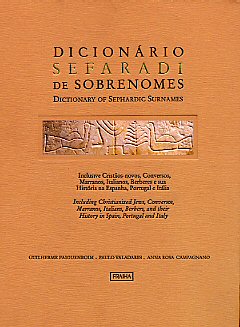
Dictionary of Sephardic Surnames

For me, the most useful single resource for Sephardi genealogy is the Dictionary of Sephardic Surnames (Dicionário Sefaradi de Sobrenomes) by Guilherme Faiguenboim, Paulo Valadares, Anna Rosa Campagnano, published by Avoteynu. For those in the UK, there is a copy on the open shelves in the Asian reading room on the third floor of the British Library. Oddly the JGSGB library doesn't have a copy.

The authors have been through a large number of key sources. indexing references to specific surnames. A great time-saver.