Showing posts with label Constantinople. Show all posts

Friday, 26 October 2012

King Francis I of France demands a Jewish doctor


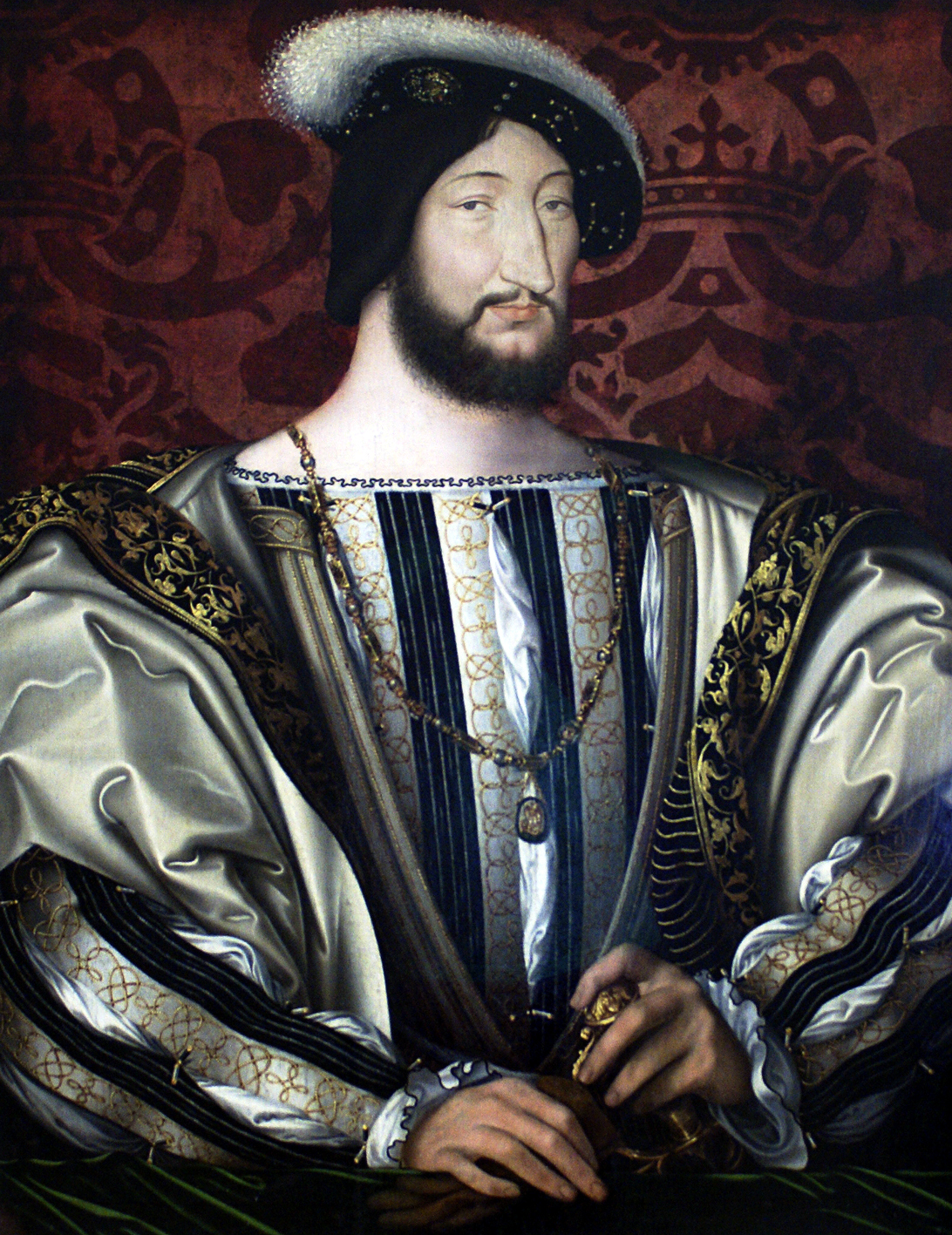
But the most powerful Argument in my Opinion to this Purpose is, that when Francis de Valois King of France was seized with a very tedious Sickness, and that the Physicians of his House and Court could give him no Ease, he said every time the Fever returned, that it was not possible for any Christian Physician to Cure him, and that he expected from them no Relief. Insomuch that one time being Impatient to find himself every day worse with his Fever, he ordered a Courrier to be dispatch’d to Spain, to desire the Emperor Charles the Fifth, to send him a Jew Doctor, the best of all his Court, from whom he hoped to receive a Remedy for his Distemper, if there were any in the Art.  There was no little Laughing in Spain at the Request, and all concluded that it was no other than the Conceit of a Man in a Fever. But for all this the Emperor was not wanting to give Order that such a Physician as was required, should be sought after, if he were to be found, though he were out of the Kingdom, and when none could be met withal, they sent him a Physician newly turned Christian, hoping thereby to comply with the King’s Curiousity. But the Physician being arrived in France, and brought to the King’s Presence, there past between them a most agreeable Dialogue, wherein was discover’d, that the Physician was a Christian, and therefore the King would take no Physic at his Hands. The King from the Opinion he had conceived of the Physician’s being a Jew, asked him by way of passing the time, if he was not as yet weary of expecting the Messiah promised in the Law? The Physician answered, Sir, I expect not the Messiah promised in the Judaic-Law. You are wiser for that replied the King, for the Signs set down in the Scripture to know his Coming are already accomplished a great while ago. The number of days (rejoined the Physician) we Christians keep well the Account of, for there are now a Thousand five hundred fourty and two Years determined since he came; he abode in the World Thirty three Years, at the end of which, he died on the Cross, and rose again the third Day, after which he ascended into Heaven, where he now Reigns. Why, saith the King, you are a Christian! Yes, Sir, by the Grace of God, answered the Physician. Then, said the King, be gone to your own Country in good time, for I have Christian Physicians enough in my own Court and House. I took you to be a Jew, who in my Opinion are those that have a Natural Ability for Cures. And so he took leave of him without allowing him to feel his Pulse, or examine his Urine, or mingle the least word concerning his Distemper. And forthwith sent to Constantinople for a Jew, who recovered him only with Asses-Milk.

Juan Huarte. Examen de ingenios; or, The tryal of wits. 1698. Pages 293-295

Wednesday, 24 October 2012

The Inquisition - An Overview


To dismiss the Inquisition as a bunch of reactionary religious nuts is too simplistic. The Inquisition was a church body with the task of suppressing heresy, meaning beliefs other than those sanctioned by the Catholic Church. It is worth noting that the early Church tolerated diversity of opinion and used persuasion to bring people back to orthodox beliefs.

The first significant outing of the Inquisition was the Albigensian Crusade against the Cathars, a sect in what is now southern France who advocated a purer form of Christianity. The Pope outsourced control of the local Inquisition to the King of France. The Kingdom of France was then one territory amongst several in what we now call France. By the end of the crusade, when the Cathars had been crushed, France had absorbed huge amounts of new territory in the Languedoc, often replacing local aristocrats with Frenchmen.

Catholic monarchs earned their legitimacy through Papal recognition so had an interest in suppressing theological opposition to the Papacy. The Medieval Catholic church was morally and financially corrupt and saw frequent outbursts of opposition from people wanting to purify the institution. Some of these, such as the Hussites, were serious challenges. The Papacy more or less kept the lid on dissent until many northern German princes supported the Reformation of Martin Luther.

In Italy, the Popes used the Roman Inquisition as a weapon in their fight for political supremacy against the [Holy Roman] Emperor.

In 1453 the Turkish army captured Constantinople, capital of the Eastern Roman Empire, creating the possibility of an Islamic conquest of Christendom. In the far west of Europe, the Christian kingdoms of the northern Iberian peninsula had slowly conquered their southern Islamic rivals, forcing many Muslims and Jews to convert. The two main Christian kingdoms, Castile and Aragon, joined together in a dynastic marriage. The monarchs had limited power over the autonomous cities and regions, and aristocrats with their own private armies.

I think maybe Spain was different from much of Europe in that it had three significant religious groups – Christian, Muslim and Jewish – and that national identity was fused with religious identity. The mob demanded discrimination against converted Jews and their descendants – the idea of purity of blood – which had no place in Catholic doctrine, but was accepted. The Inquisition only had authority over those who had converted to Catholicism (although later it implicitly recognised Protestant baptism as legitimate, so it could prosecute foreign-born Protestants).

The Inquisition in Spain was outsourced by the Papacy to the Monarchy, and was about the only national institution. I do not know the degree to which the Inquisition followed the Monarchy’s political agenda, but clearly a Spanish national identity emerged. Despite a number of eye-wateringly large bribes to the Vatican, the Inquisition was also established in Portugal. 

Within the Catholic Church the Inquisition came under the control of the Dominicans (an order of monks) who used it to bash their Franciscan rivals. The Inquisition controlled doctrine, so was immensely powerful in internal Church politics. Inquisitors – appointed by the Monarchy in Spain and Portugal - had some power over local bishops, often appointed by local aristocrats.

The Spanish and Portuguese Inquisition were self-funding out of property confiscated from their prisoners. Outside Iberia the Inquisition was clearly seen as unjust (for example, the secret denunciations and people not being tried in open court) and its officials experienced a number of popular revolts. I have the impression that the “Old Christian” majority in Spain and Portugal felt the Inquisition was on their side.

To be descended from heretics was itself a cause for suspicion of heresy, so New Christians (descendants of converted Jews) were an obvious and easy target. New Christians tended to be in commerce or the professions, the importance of which was not understood in a mercantilist economy. Targeting them was probably popular with ordinary people, who could feel superior to the ‘other’, while appearing to support Church doctrine and making a little money for the Monarchy. I sense there was also a political element, especially when Portugal broke away from Spain. The Portuguese identity of the victims was stressed.

Were the prisoners of the Inquisition authentic heretics in Catholic eyes? I suspect some were and many weren’t. Actually, I don’t think the “Jews” were a homogenous group. Maybe we can differentiate between the mega-wealthy who left Iberia around the turn of 16th Century, those who were what me might describe as “middle class” and as tradesmen. I note that many New Christians remained in Spanish and Portuguese territory – or returned to it – when it was possible for them to live elsewhere. It may be that they had no choice, or that the Inquisition was seen as a risk of the job. I wonder if – as with the drug industry today – it was the less important people who got caught. Of course, once someone had been despoiled of their property and remained in Spain, they might be targeted again.

I note that when they had the opportunity, very many New Christians chose to assimilate into the general Catholic population.

The Inquisition was an organisation of individuals. I suspect some were sadistic and had mental health issues. Some probably genuinely believed they were helping their prisoners achieve salvation, a goal so important that the means justified the ends.

I plan to expand these thoughts on my Sephardic Genealogy website.
Friday, 25 November 2011

Reports of the Jewish Messiah reach Constantinople, 1728

The report of an army of half a million Jews, headed by the Messiah and marching out of Africa, is treated dismissively by the author who seems to be English ambassador to Turkey. I wonder what he thought at the time. His Jewish servant is convinced of the story.

I took my leave of this good natur'd and generous Sultan, who wants only our Education and Religion, to make a great figure in the world. I got to my lodgings about two hours after fun-set, much pleas'd with the magnificent variety of one day's diversions; and was hardly set down on my sofa to repose myself, after so agreeable a fatigue, when my old Druggerman or Interpreter, Abraham, a learned Jew, whose conversations often entertain my solitary hours, came to me with a good deal of surprize and amazement in his face. I immediately saw something extraordinary had happen'd, and enquir'd of him what was the matter? My Lord, says he, I bring you an account, which if it proves true, will make the enemies of my nation, and the despis'd Jewish people, glad to lick the dust of their shoes. Here is Rabbi Solomon just come from Tunis, who is sent to warn our brethren, that the ten Tribes are discovered in the middle part of Africa, where they retir'd in the days of their Captivity and affliction. He says they have a vast Empire there, and are very powerful, having near 50 millions of souls under their Kings, who are most observant of the Law, and have preserv'd their language pure and unmix'd, as well as their rites and ceremonies. The said Rabbi Solomon avers, that the great Messiah is risen among them, and hath chosen out an army of 500000 pick'd men, all as valiant as the Maccabees; that they have left all the strong holds of their Empire of Gangara and Seneganda well garison'd, and are in motion from the frontiers of those kingdoms, to cross the desarts of Borno and Guoga, and pass the Nile, seize on Egypt, and then the land of Canaan their Inheritance, and build up the fallen glories of mount Sion and Jerusalem. As I had a map of Africa in my room, I immediately search'd it for the kingdoms and desarts, my good Druggerman had settled his friends in, and found so far all was right; but desiring to know what authorities he or Rabbi Solomon had for this report, he gave me two letters from the Synagogue of Tunis, directed to the faithful Jews of Stamboul and its Provinces, willing them to be on their guard, and behave like men, for the Kingdom was about to be restor'd to Israel. Along with these he communicated to me, under the solemnest promises of secrecy, the Messiah's Manifesto; in which he exhorts his subjects and brethren to prepare to rifle, for the restoring both the sword and sceptre, into the hands of the faithful and chosen of heaven; and commands them to be ready, to depart for Jerusalem, to- the solemn sacrifice, so soon as they had certain intelligence from him, of his being possess'd of Egypt and Grand Cairo. I read them all over (that is, the Turkish translation of the Hebrew) with much admiration; and asking Abraham, if he believ'd these to be genuine letters? he answer'd me very hastily and angrily, as genuine as the Talmud; and that it was universally known to all the Turks, and the merchants in Stamboul, that these things were true; and it is certain, I had heard for several days, of some commotions in the inland parts of Africk, of a strange people.

I then ask’d him, what the Jews determined to do? Even, says he very eagerly, to obey the commands of their Messiah; and so soon as, he hath conquer'd Egypt to depart from the four winds under heaven, and be gather’d unto the brethren of the dispersion at Jerusalem at the solemn sacrifice. He said this with tears in his eyes, and such emotion of hearts that I could not chuse but pity him and his deluded people, who are as credulous as malice or love; and will probably, throughout this vast Empire, be, standing with their ears prickt up, and, like birds, ready to take wing with all they can carry with, them, if the news of this Revolution?


Upon this the Chiaus related Abraham's story, very much in the fame manner I have told it your Lord/hip; but with this addition, that the new Messiah was the strongest and most beautiful man upon earth.


But the Jews, my Lord, ate above all other nations foolishly credulous; this Abraham my Truchman, is really more knowing and judicious than'most of his Tribe, and yet he reads the Talmud, the Misnah, and all the fabulous mysteries of the Cabbala, with as much veneration as the Pentateuch. He is as much persuaded that our tears were not salt, till Lot's wife was chang'd into a pillar of salt; that she has still her Menses; and that me was thus chang'd,becau fe that out of malice she would not put down the faltseller on the table to the angels; as that Sodom was burnt.


Source: Memoirs of the twentieth century. 1728.

Jewish Prostitutes in Constantinope? 1794

It may be remarked that both Du Loir and D'Arvieux agree in ascribing the honorable office of bawds to the Jewesses. At Constantinople, the shops of the Jews are said to be the ordinary places of rendezvous; which they certainly are not at Aleppo, being all situated in the public Bazar, and in size very incommodious.


Alexander Russell. The natural history of Aleppo, Volume 1. 1794. Page 428.

Tuesday, 22 November 2011

Jews of Constantinople, 1784

The report below suggests that in 1784 Jews lived better in Constantinople than London. If so, it was probably the end of the era. Between the usual anti-Semitic nonsense it shows the Jews' role as (essentially powerless) middlemen.
The Jews wear drawers and slippers of a sky-blue colour, their turban is totally different from the Christians, and they have two bunches of hair hanging down by the sides of their ears. These people are very fond of appearing what they are, lest they should be mistaken for Christians. But there are some privileged persons, both Greeks and Jews, who are allowed to wear yellow slippers, and scarlet drawers, the fame as the Mussulmen; but these are the dragomen to ambassadors, and the Metzellemins, who pay no annual tribute.

The Jews come next under our consideration. Their number in and about Constantinople is astonishing; they reckon 40,000 families, which, upon a moderate computation, makes 200,000 persons. They are subject to a kind of aristocratical government among themselves. They have a class of men whom they call Cajams [Haham?], they are doctors of their law, and to them they submit the decision of all common causes which occasion any differences between them ; and it seldom or ever happens that they appeal from the sentences of those judges to the Turkish tribunals. They possess great riches, and live as much, if not more at their ease, than their brethren at London ; for the Turks esteem them far beyond Christians. They carry on every branch of art and commerce, from which they acquire their opulence.

There is not a Turkish house at Constantinople of any note, but what has Jews familiar in the family. One may judge from this of the number and quality of their protectors; a circumstance which makes them haughty and insolent to the Greeks and other Christians. All the under-officers of the custom-house are Jews, who make very considerable gains. The factor to the Agha of the Janissaries is a Jew, and perhaps the most considerable in the city. Though they are held in slavery, not being suffered to purchase lands, they have a strong tincture of ambition, and love to lord it over their inferiors, by the strength of their riches. A prodigious number, as in other capital cities, follow the profitable business of exchange-brokers, money-scriveners, and dealers in jewels. Their intercourse with the Turks of rank gives them a knowledge of their private circumstances, and of their secrets; a science which they turn to very good account as pimps and spies. A foreign ambassador may know more of the state of the Turkish cabinet by gratifying the avarice of a Jew, that being his ruling passion, than from any other quarter whatever.


Source: Elias Habesci. The present state of the Ottoman empire. 1784.

Sunday, 20 November 2011

Jewish Population of the Ottoman Empire, 1819

Extract from a letter dated Constantinople, October 26, 1819. It gives estimates for main Jewish population centres in the Ottoman Empire.

"The Jews of Constantinople, and indeed most of the cities in Turkey, are Spanish Jews; and to the present day speak a language which with great propriety may be denominated the Jewish Spanish. I formerly entertained an idea, that perhaps they had adopted the Turkish as the language of their families, and of their written intercourse with each other: this however is not the case, for in every quarter of Asiatic and European Turkey, where the Spanish Jews are to be found, the Jewish Spanish is the language of their family circles and of their written correspondence. This language of their’s is said to be spoken and written with the greatest purity in Salonica, (the ancient Thessalonica,) where their numbers amount to about 10,000 souls. Their numbers in and about Constantinople are very considerable, but cannot be exactly ascertained, from causes over which a traveller has no controul (sic). However, I have heard some of the most intelligent Jews here estimate them at between 60 and 70,000 souls. They reckon about 8000 more in Smyrna [Izmir], 4000 in Adrianople [Edirne], 3000 in Gallipoli, 3000 in Brusa [Bursa], 7000 in Jenichere [?], 100 families at the Dardanelles, and so further in other towns of minor note throughout Turkey."


Source: American Bible Society, Annual report of the American Bible Society. 1821. Page 182.

Spanish Jews of Constantinople, 1833

This missionary report claimed that Constantinople had the largest Jewish population of any city in the world in 1833. I suspect this is incorrect.

"The Jews at Constantinople [Istanbul] are variously estimated at from 40,000 to 80,000. The number is uncertain, but it is believed that more Jews are collected there than at any other place of their dispersion. … Having come originally from Spain on the expulsion of the Jews from that country, their language is corrupted Spanish which is written in the Spanish Rabbinical letter; differing from the German Rabbinic and still more from the Hebrew letter. Their language contains a mixture of Spanish and Hebrew words. …

The Jewish boys attend school for several years, but not the girls. Instances where males cannot read are rare, as rare is to find a female reader."


Source: William G. Schauffler, Missionary. Mission to the Jews of Turkey. Annual report - American Board of Commissioners for Foreign Missions: Volumes 24-26. 1833. Page 45